
ERP & Operations
ERP Implementation in Oman: A Practical Roadmap
A step-by-step ERP implementation roadmap for Oman businesses—from process discovery and scope control to migration, training and measurable adoption.
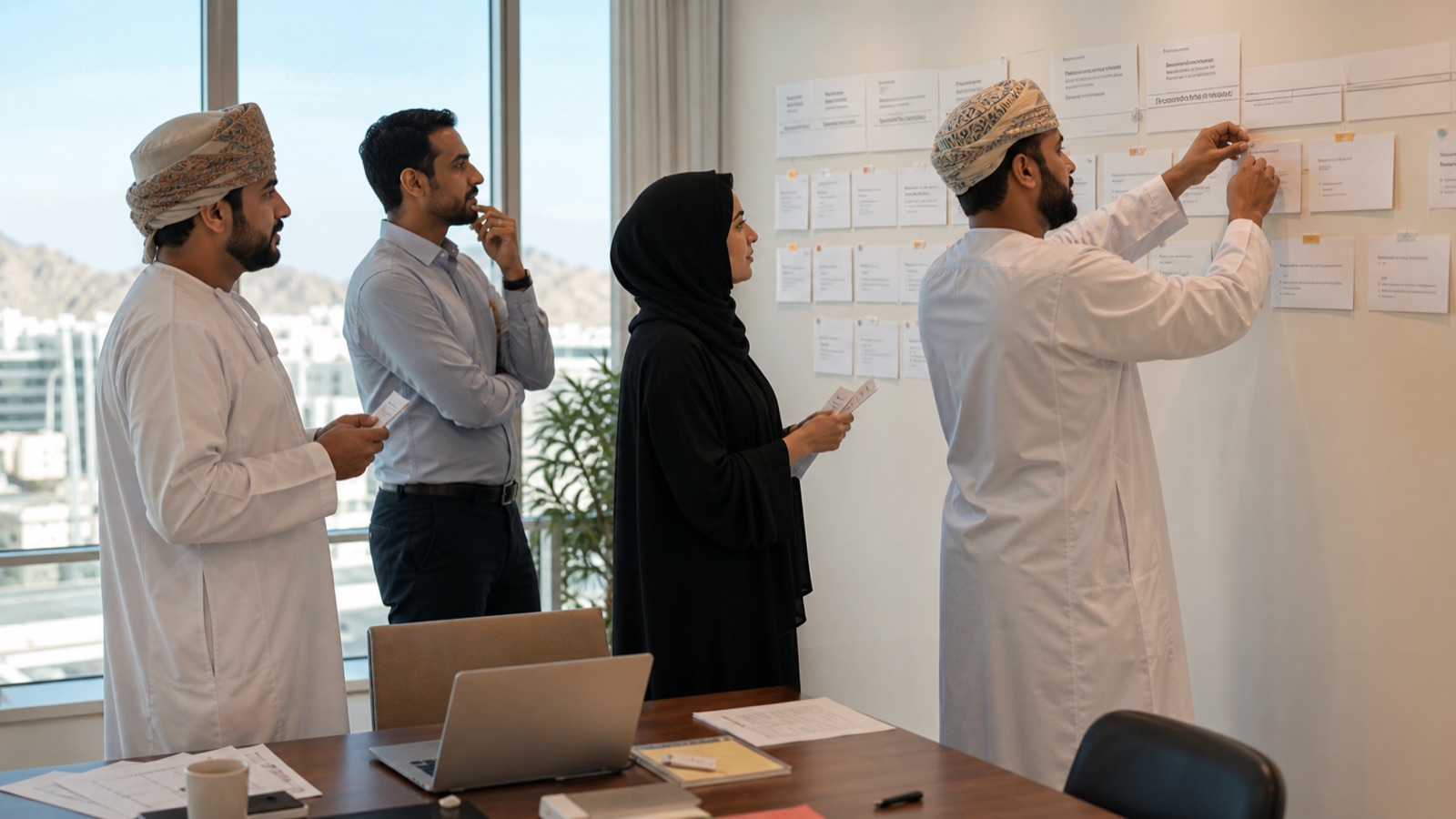
ERP implementation in Oman succeeds when it is treated as an operating-model change, not simply a software installation. The system must reflect how quotations become orders, how purchases become stock, how work becomes invoices and how managers receive reliable information. A practical roadmap protects those connections while keeping the project understandable for employees and leadership.
Key takeaways
- Define business outcomes before selecting modules or custom features.
- Map real workflows, ownership and exceptions—not only the ideal process.
- Launch in controlled phases with clean data, trained users and named process owners.
- Measure adoption and data quality after go-live, not only technical uptime.
Start with outcomes and scope
Begin with a short list of business outcomes: faster month-end close, one customer record, accurate available stock, fewer approval delays or clearer project profitability. Each outcome should have an owner and a current baseline. This prevents the project from becoming a catalogue of attractive features with no operational priority.
Scope should be expressed as complete workflows. “Sales” is too broad; “lead to quotation to order to invoice to collection” is testable. Define which entities, branches, currencies, approval levels and reports are in the first release. Place lower-value ideas in a visible later-phase backlog.
Map processes and data before configuration
Workshops should include the people who perform the work, not only department heads. Capture normal steps, exceptions, handoffs, documents and the decision rules behind approvals. The goal is not to reproduce every spreadsheet. It is to distinguish controls that matter from habits created by the limits of old tools.
At the same time, profile customer, supplier, product, employee and accounting data. Agree who owns each field, which duplicates will be removed and which historical records genuinely need migration. Clean master data is one of the strongest predictors of a useful ERP launch.
Configure, integrate and test real scenarios
Configuration should be demonstrated in short cycles using recognizable Oman business scenarios. Test VAT treatment, currencies, delivery and return flows, approval limits, partial payments, credit notes, stock adjustments and employee access. Integrations with websites, banks, email, e-invoicing or specialist systems need error handling and reconciliation—not only a successful demo.
User acceptance testing should follow end-to-end scripts with expected results. Record defects, severity, owner and retest evidence. A department approving its screen is not enough if the resulting transaction fails in finance or inventory.
Prepare people and govern the launch
Train by role and task. A salesperson needs a different learning path from an accountant or warehouse user. Give teams a safe environment for practice, simple job aids and a named support route. Managers should reinforce the new process by using ERP reports in operating meetings.
For go-live, define cut-off times, opening balances, stock-count rules, rollback criteria and a daily issue review. Keep the old system read-only where appropriate. After launch, review adoption, data completeness, unresolved workarounds and cycle times at 30, 60 and 90 days.
Common questions
How long should an ERP implementation take?
There is no responsible universal duration. Timeline depends on workflow count, data quality, integrations, customization, decision speed and user availability. A focused first phase with clear acceptance criteria is usually safer than a large simultaneous launch.
Should every process be customized?
No. Prefer standard configuration when it meets the control and user need. Customize only where a proven operational requirement creates material value or where local compliance and integration make it necessary.
A practical next step
Document one complete workflow and its current problems before requesting demonstrations. Digital Maze can facilitate that discovery, convert it into a phased solution blueprint and deliver an integrated ERP solution in Oman with training and post-launch support.
Sources and further reading
Put this guidance into practice
Explore Maze ERP for connected business operations in Oman to discuss the scope, controls and delivery approach for your organization.
Explore the Digital Maze ERP operations project. This is our own platform, illustrated with demonstration data.