
ERP & Automation
7 Signs Your Business Is Ready for an Integrated ERP
Learn the practical warning signs that show your business has outgrown disconnected spreadsheets and is ready for one integrated ERP platform.
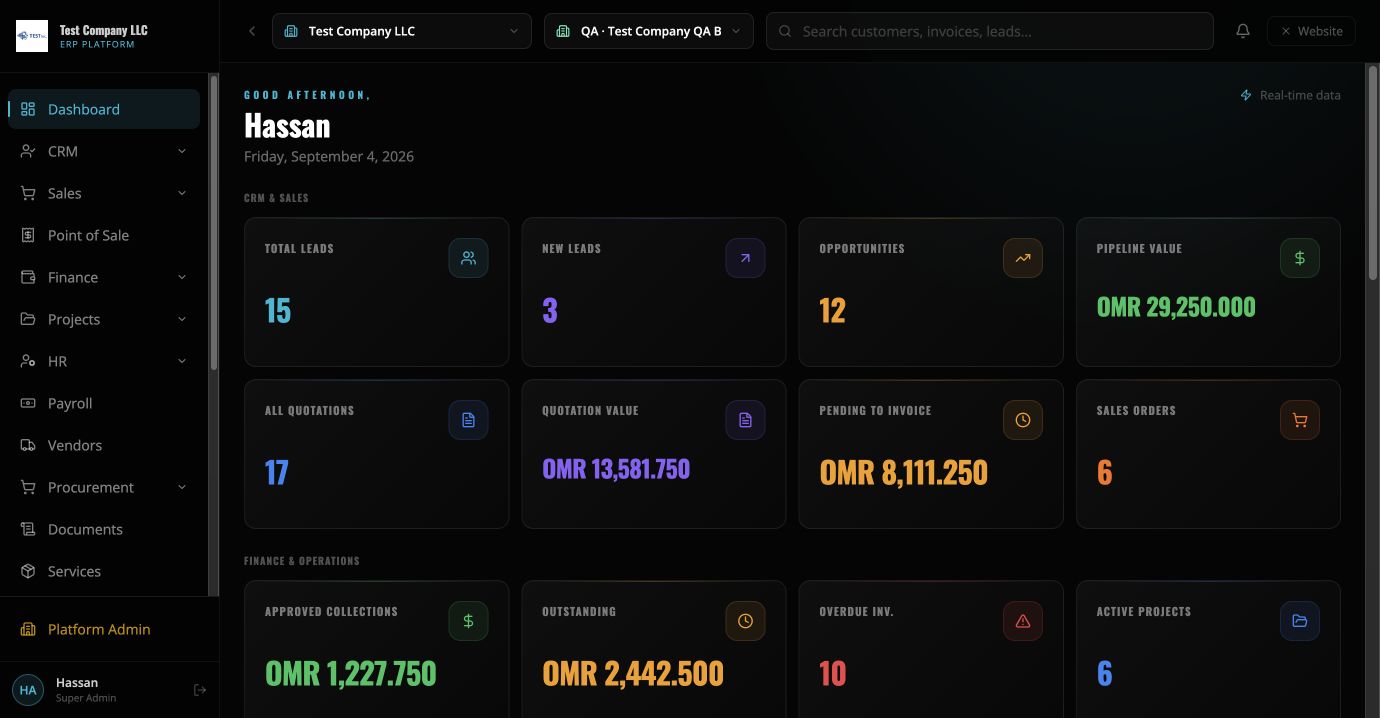
Growing businesses rarely decide to adopt an ERP because of one dramatic failure. The need usually appears as dozens of small delays: the same customer details copied into several files, managers waiting for reports, stock numbers that do not match, and invoices that require too many manual checks.
An integrated enterprise resource planning system brings finance, sales, purchasing, inventory, projects and people operations into one reliable workflow. Here are the clearest signs that the timing is right.
1. Teams keep entering the same information more than once
When sales, finance and operations maintain separate spreadsheets, every hand-off creates another chance for an error. Re-entering a customer, supplier, item or payment wastes time and makes it difficult to know which record is current.
A good ERP creates one source of truth. A change made by an authorised user is immediately available to the teams that need it.
2. Reporting takes days instead of minutes
If management reports depend on collecting files from several departments, decisions are being made with old information. The issue is not the effort of creating a report; it is the delay between what happened and when leaders can see it.
> Real-time visibility is not only a reporting upgrade. It changes how quickly a business can respond.
An integrated dashboard can show revenue, receivables, purchasing commitments, project progress and operational risks without a manual consolidation exercise.
3. Invoice and payment follow-up is inconsistent
Growing transaction volume exposes weak processes quickly. Invoices may be sent late, receipts may not be matched, and overdue balances can disappear inside email threads.
ERP workflows can connect quotations, sales orders, invoices, payments and accounting entries. This gives finance a complete audit trail and helps customer-facing teams answer questions confidently.
4. Stock and purchasing decisions rely on guesswork
When inventory is tracked separately from sales and purchasing, teams can over-order slow-moving items or run out of critical stock. The result is tied-up cash, missed delivery dates and urgent purchases at higher cost.
Integrated inventory and procurement make reorder levels, available quantities, purchase orders and receipts visible in one place.
5. Approvals depend on messages or verbal confirmation
Informal approvals may work for a small team, but they become risky as the company grows. Expenses, purchase orders, leave requests and discounts need clear ownership and traceable decisions.
ERP approval workflows establish who can request, approve, reject and review each transaction. Audit logs protect the business without making daily work unnecessarily difficult.
6. Customer service cannot see the full history
Customers expect quick answers. If a team member has to ask three departments for the latest quotation, invoice, project update or support ticket, service becomes slow and inconsistent.
A connected CRM and ERP view gives authorised staff the context they need while protecting sensitive financial and employee data through role-based access.
7. Growth is adding administration faster than revenue
The strongest signal is when every new customer creates more manual work than the last. Hiring people to copy data between systems is not a scalable operating model.
Automation should remove repetitive work, enforce business rules and allow teams to focus on customers, delivery and improvement.
What to do next
Start with a process review rather than a software shopping list.
- Map the workflow from lead to cash and purchase to payment.
- Identify duplicate data entry and approval bottlenecks.
- Define the reports management needs every week.
- Agree on roles, permissions and ownership.
- Plan migration, training and phased adoption.
Digital Maze helps businesses in Oman design practical ERP roadmaps, integrate essential workflows and build systems that can grow with the organisation. The right ERP is not simply a database; it is a clearer way to run the business.
Put this guidance into practice
Explore Maze ERP for connected business operations in Oman to discuss the scope, controls and delivery approach for your organization.
Explore the Digital Maze ERP operations project. This is our own platform, illustrated with demonstration data.